
Searches for the most expensive hotel in japan are half fantasy and half budgeting honesty. People want to know what eye-watering nightly rates actually purchase — space, silence, a private bath, a view that is not a postcard reprint, service so precise it feels choreographed — and then they want the opposite number: what the same trip feels like at a normal rate.
This guide maps the ultra-luxury end without pretending everyone should book it, then contrasts it with business hotels that quietly power most Japan itineraries. For how hotel nights sit inside a full trip average, use the average trip cost guide; for onsen-town packing when the bath is the reason you booked, see the winter packing guide; for the shared amenity rules every rate tier still inherits, start with the base packing checklist.
What the top end is actually selling
Exact “most expensive” rankings move with suite type, season, exchange rates, and whether dinner is bundled. The useful question is not a forever champion. It is: what are you buying when the number looks absurd?
Usually some mix of:
- Scarce private space in dense cities
- Art-directed views and interiors
- Private onsen or exceptional bath design
- Kaiseki-level dining in-house
- Staff ratios that make logistics invisible
- Locations that purchase quiet, access, or skyline theater
When rates enter the rarefied zone, you are also buying scarcity itself: few keys, rituals that take staff time, and the social proof of a place people screenshot. That can be meaningful. It can also be an expensive way to avoid deciding what you enjoy. Name the reason before you pay.
Three luxury shapes: Tokyo, onsen country, Okinawa
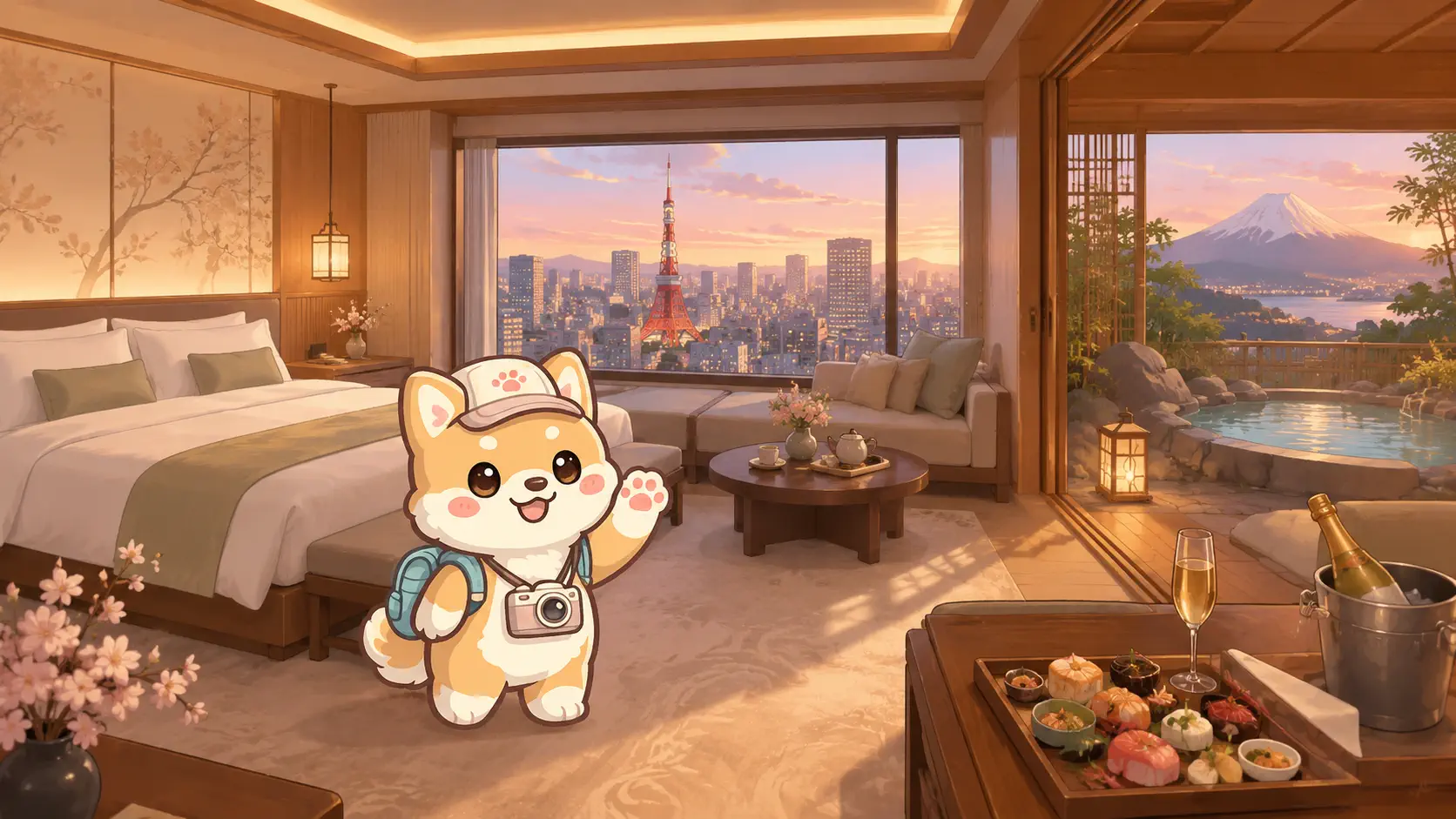
Tokyo ultra-luxury sells vertical quiet. You stay inside one of the world’s densest cities while the room edits out noise — skyline glass, spa access, bookings handled with unnerving competence. Worth it if calm is the product. Wasteful if your days are all street-level walking and the suite becomes a spectacular luggage locker. One ceremonial night after a long-haul flight can still be the trip’s exhale.
Hakone and onsen country often attach extreme rates to ryokan culture: private open-air bath, mountain or lake air, dinner as the evening’s main event. You are not only paying for sleep. You are paying for a contained world of wet stone, cedar, and seasonal plates. To feel broader hot-spring town moods before you decide luxury versus simple steam, a Hakone lake cruise camera and the Kusatsu Yubatake live view show open water versus a steaming town center — no deposit required.
Okinawa villas and resorts sell privacy, pools, and ocean air — arrival as the destination. That model only works if the itinerary can slow down. A villa night jammed between two rushed island transfers wastes the thing you bought. For a street-level Naha energy check before you decide resort isolation versus city base, the Kokusai-dori live camera shows how busy the main strip feels — useful contrast to a locked-gate villa fantasy.
Business hotel Japan: the practical opposite
A business hotel japan night for roughly ¥8,000–¥15,000 in many cities (sometimes less or more by season) usually includes a compact clean room, reliable WiFi, bathroom amenities, slippers, basic pajamas or yukata, and a station-near location. It will not give you a private rotenburo. It will give you an honest base for walking all day.
Japan business hotels are one of the country’s quiet advantages: small by U.S. standards, efficient by Japanese urban design, consistent, and close to laundry. If your joy is temples, food, trains, and evening streets, a business hotel can beat a luxury suite on total trip happiness simply because you spend more hours outside.
One splurge, not a sorted-by-price accident
A sane approach:
- Sleep practical for most nights.
- Book one intentional splurge near the emotional peak of the trip.
- Choose it for a reason you can name — private bath, landmark view, anniversary dinner included, post-hike recovery.
If your joy is street food and dawn walks, spend on routing and one great meal instead of a room you only enter to sleep. If your joy is design, bathing rituals, and quiet service, researching the top end is not frivolous — buy the night for that reason and keep the rest grounded.
What “most expensive” usually means in practice
When people search the most expensive hotel in Japan, they often mean one of three things: the highest published suite rate in Tokyo that week, the rarest private ryokan experience with almost no public booking inventory, or a branded palace hotel where the bill includes ceremony-level service. Those are different products. A skyline suite sells architecture and status. A mountain ryokan sells silence, bathing ritual, and dinner pacing. Comparing them on yen alone is how you book the wrong dream. The empty alcove is doing work — japanese minimalism is that grammar, not a beige sofa. If a listing mentions a nakai envelope, that is not a restaurant tip: do you tip tour guides in Japan.
Read the rate for what night it covers. Some ultra-luxury quotes look insane until you notice dinner for two, breakfast, and onsen access are bundled. Others look “cheaper” until taxes, facility fees, and private-bath surcharges arrive. Screenshot inclusions before you fall for a round number on social media.
Skip the top end on nights when you arrive after 22:00, leave before 7:00, or plan to sleep eight hours and vanish. Ceremony needs presence. A compact station hotel earns those nights; save the absurd key for a date when dinner, bath, and morning light are the itinerary.
Booking checklist for expensive nights
- Confirm inclusions: dinner, breakfast, taxes, bathing tax, private bath access
- Read cancellation rules twice in peak season
- Check transport with large luggage — some dream ryokan are awkward
- Ask whether the “view” depends on season or weather
- Confirm check-in and last-order times for dinner if you arrive by late train
Ignore marketing adjectives for five minutes and list inclusions in a notebook. The highest number wins only if you will use what it includes. Luxury that needs a taxi obstacle course after a shinkansen day needs a plan, not vibes. If the property answers slowly before you book, assume service pace after you arrive will match — that is useful information, not a snub.
One more filter: if you cannot name what you will do in the room besides sleep, you are shopping a status object. Book the business hotel, spend the difference on the experience you will remember walking through — a meal, a train view, an onsen town afternoon — and keep the ultra-luxury search for a night when the room itself is the plan.
FAQ
What is the most expensive hotel in Japan right now?
Rankings change by suite and date. Check current top Tokyo suites and exclusive ryokan rather than last year’s listicle.
Is a private onsen ryokan better value than a Tokyo skyline suite?
If bathing and dinner are the priority, often yes. If city energy is the point, choose Tokyo.
Are Japan business hotels uncomfortable?
Small, not necessarily uncomfortable. Location and cleanliness often matter more than square footage.
Can I mix luxury and business hotels?
Yes — that is the strategy most happy travelers use without announcing it.
Do expensive hotels include meals?
Sometimes. Always check. A higher rate may already include kaiseki worth a separate restaurant budget.
Is luxury worth it on a first Japan trip?
Only for a night that matches your taste. First trips usually gain more from location and pacing than from the single most expensive key in the country.


