
A smart japan winter packing list starts with one idea: Japan does not share one winter. Hokkaido can sit under serious snow while Tokyo feels dry, windy, and only moderately cold, and Okinawa can still feel mild enough for a light jacket in the evening. Pack layers you can add and remove, not one heroic coat that fails in three climates.
This guide covers city winter, snow resort days, and onsen trips — including what you can skip because baths and hotels already provide it. Start from the base packing checklist for documents and cash; for other seasons use spring, summer, or October–November.
Packing list Japan winter: the layering system
Think in three layers for a packing list japan winter plan:
- Base — moisture-wicking thermal top and bottom for snow days or long outdoor waits
- Mid — fleece, light wool, or insulated vest you can wear indoors without sweating
- Shell — windproof and water-resistant outer layer for sleet, sea wind, and train-platform gusts
Cotton as a base layer is a regret in wet snow. It holds moisture against your skin. Save cotton for indoor evenings.
Japan packing list winter by region
Hokkaido and the deep north
If your route includes Sapporo, Niseko, or other snow-country stops, pack as if winter is real:
- Insulated waterproof boots with tread
- Warm hat that covers ears
- Gloves you can still use with a phone
- Thick socks (and a spare pair in your day bag)
- Gaiters only if you will walk uncleared paths
Watch a Sapporo city live camera the week you leave if you want an honest look at street snow and coat choices. For resort atmosphere, the Niseko Hanazono resort camera shows how open and wind-exposed slopes feel even through a screen.
Tokyo, Kyoto, and Osaka winters
City winters are often about wind and timing more than epic snowfall:
- Warm coat or insulated parka
- Scarf or neck warmer for outdoor waits
- Layers under the coat so heated shops and subways do not cook you
- Shoes with some grip — morning frost and polished station floors are slippery enough
You rarely need full mountaineering boots for a Tokyo museum week. You do need warm extremities for river winds and evening walks. If you add cold-day escapes from the capital, the winter day trips from Tokyo guide covers destination tactics — this page only packs the layers for the outbound morning.
Okinawa and the mild south
If winter means Okinawa on your itinerary, swap snow boots for a normal jacket and keep one warm layer for night buses and air-conditioned indoor spaces. Do not pack Hokkaido volume for an island week.
Packing list for Japan in winter: footwear that survives ice
Shoes decide mood. A packing list for japan in winter should treat footwear as infrastructure.
Bring:
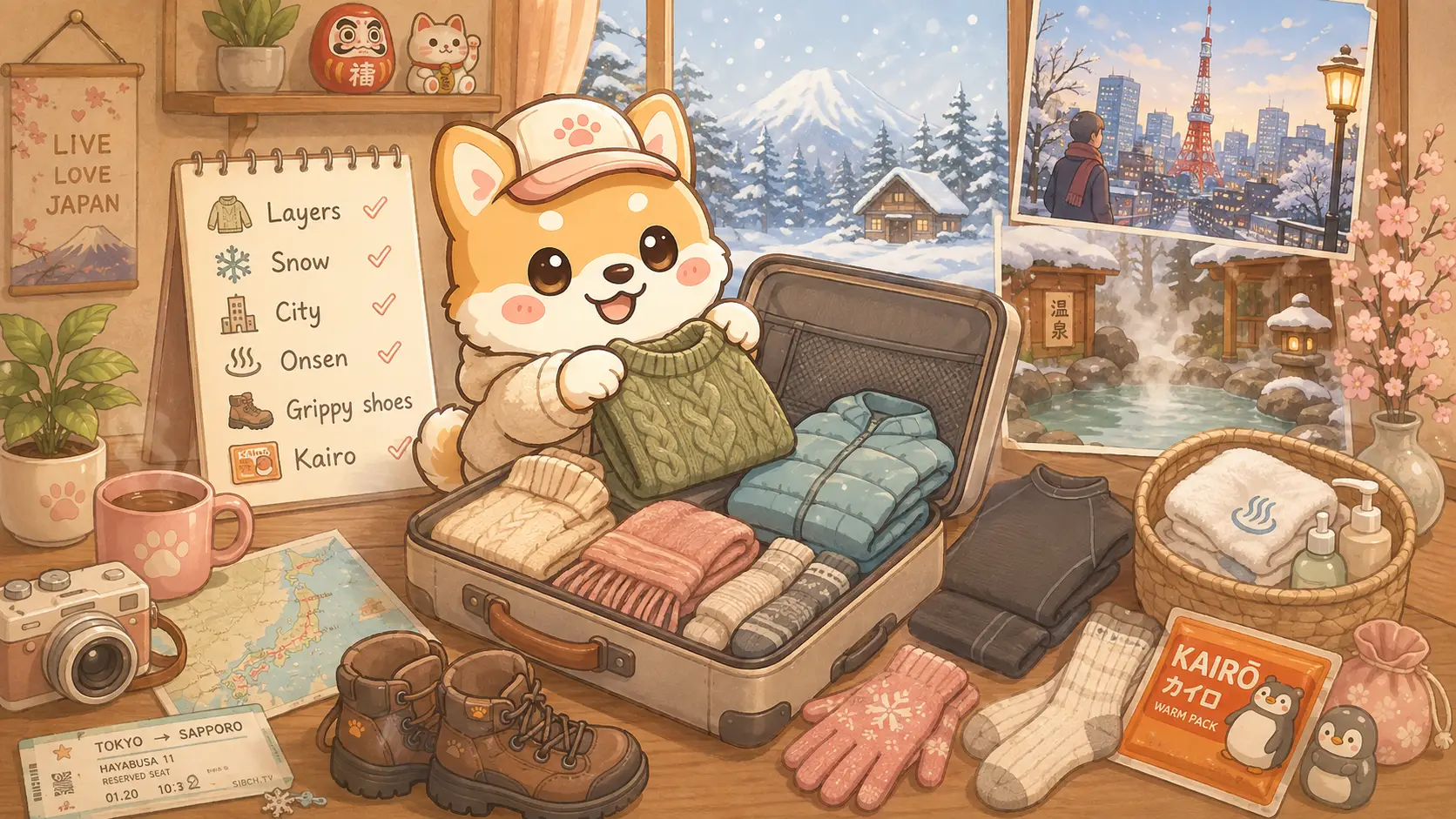
- Waterproof or water-resistant walking shoes with real tread
- Optional shoe spikes or portable grips if you will face icy sidewalks (especially in mountain towns)
- Indoor socks without holes — you will remove shoes often
Avoid smooth leather soles on packed snow. Avoid brand-new stiff boots with no break-in time. Blisters in freezing wind are a special kind of misery.
Heat packs, convenience stores, and small winter hacks
Japan’s winter secret weapon is sold at almost every convenience store: kairo disposable heat packs. Stick-on versions go on the lower back or over socks (follow package instructions). Hand-warmer packs live in pockets between photos.
Also useful:
- Lip balm (dry air + wind)
- Moisturizer
- Hand cream
- A compact umbrella for wet snow and sleet
- Portable battery (cold drains phones faster)
You can buy kairo after arrival. Packing two for the first transit day still feels kind. A heated coffee can from a japanese coffee vending machine does the same job for ten minutes on a Sapporo sidewalk. Cold also drains phones faster — settle eSIM vs pocket WiFi before you fly so you are not troubleshooting activation with numb fingers; the eSIM vs pocket WiFi comparison is the decision page.
2 week Japan packing list winter: laundry and volume
A 2 week japan packing list winter should not mean two weeks of giant sweaters.
Better approach:
- 7–8 days of base clothing
- 2–3 warm mid-layers rotated
- 1 serious outer shell
- Mid-trip laundry in a city stop
Winter clothes are bulky. Laundry access in Japan is good. Your suitcase zipper will thank you.
Japan ski trip packing list notes (even for non-skiers)
If your winter trip includes a resort town, a light japan ski trip packing list mindset helps even when you only ride gondolas and walk the village:
- Sunglasses or goggles for bright snow days
- Sunscreen for face (snow glare is rude)
- Extra socks
- Waterproof outer layer
- Daypack for layers you shed after lunch
Rent skis and serious boots locally unless you love airline equipment fees. Pack soft goods; rent hard goods.
Indoor heat, outdoor wind: the winter rhythm people underestimate
Winter days bounce between overheated trains, dry lobbies, and sharp platform wind. The mid-layer only works if you peel it in under three minutes without blocking a carriage aisle. Gloves that leave a fingertip free for IC cards beat mittens that turn every ticket gate into comedy. If the route mixes city museums with one snow overnight, stage footwear once — waterproof boots for the snow night, walkable city shoes for the rest — and leave the heavy shell off indoors.
Onsen packing: what to bring and what to leave
Onsen towns are a winter highlight. Skip rebuilding the amenity aisle — towels, soap, dryers, and ryokan yukata are usually on site (same logic as the base packing list). Winter-specific extras are a small quick-dry towel if you hop day baths, a waterproof pouch for phone and cards, a hair tie, and modest clothes for the cold walk between bath and room.
Leave full-size bottles, swimsuits meant for traditional baths, and anything with heavy glitter or dye that could bother bath etiquette.
If your winter route includes Gunma steam and snow-town atmosphere, a Kusatsu Yubatake live camera is a cozy way to see the main hot-water field before you pack for wet stone streets and cold exits from the bath.
What hotels already solve in winter
Hotel slippers and toiletries do not change in January — spend suitcase volume on socks and a shell instead. Read ryokan listings once for included dinner and yukata, then stop packing duplicates.
FAQ
How cold is Tokyo in winter compared with Hokkaido?
Tokyo is usually colder and windier than visitors expect, but not Hokkaido-cold. Hokkaido packing is a different category of insulation and footwear.
Can I buy winter clothes after I arrive?
Yes, in big cities Uniqlo and similar stores are excellent. Still pack a warm arrival outfit for the airport train at night.
Do I need a huge down coat?
Only if your itinerary is snow-country heavy or you run cold. Many city travelers do better with a solid mid coat plus layers.
Are umbrella and snow boots both necessary?
In wet snow cities, yes to a compact umbrella and grippy waterproof shoes. Full snow boots depend on region and sidewalk conditions.
What should I pack for onsen etiquette?
A small towel, clean socks, and an open mind. Leave the swimsuit for hotel pools, not traditional baths — the why is in things not to do in Japan.
Should I pack differently for a ski week versus a city week?
Yes. Ski weeks need waterproofing, eye protection, and more socks. City weeks need walkable warm shoes and layers for heated indoor spaces.


